Go Backend Developer Interview Preparation
Use this Go backend track to rehearse spoken answers for technical interviews. The setup keeps Go selected so you can continue into interview configuration without repeating the technology choice.
Selected track
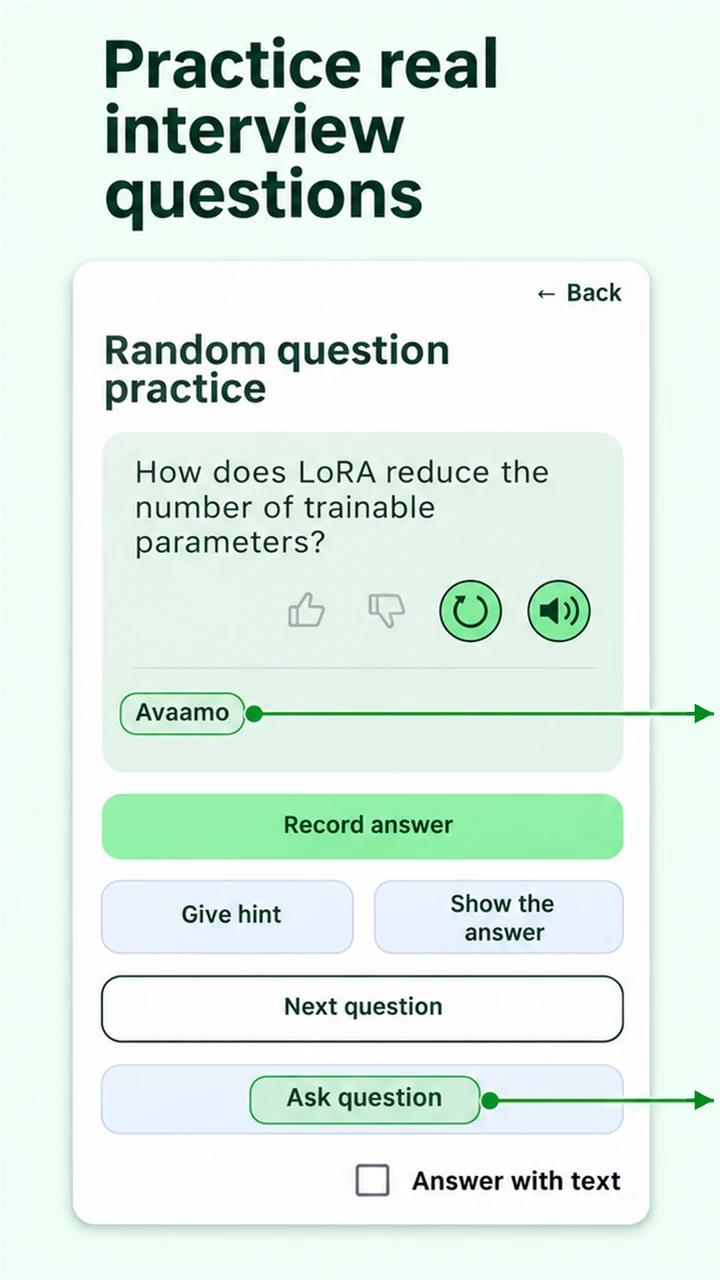
- Practice speaking, not only reading answers
- Get technical feedback after each answer
- Practice clear reasoning under follow-up pressure
Our question bank includes questions candidates reported in interviews at these companies
- Meta
- Booking.com
- Bloomberg
- Microsoft
- Stripe
- Apple
- EPAM Systems
- OpenAI
- Netflix
- Spotify
- GitHub
- HackerRank
- Rakuten
- Shopify
- Thoughtworks
- Amazon
- Uber
- Airbnb
- Walmart
- Anthropic
- DoorDash
- NVIDIA
- JPMorgan Chase
- PayPal
- Cloudera
- Google Cloud
- HDFC
- Scale AI
- TCS
Sample candidate evaluation
How do you initialize a Go map, and how do you distinguish a missing key from a stored zero value?
Sample candidate answer
I’d use make(map[string]int) and read m[key]. If it returns zero, the key wasn’t present.
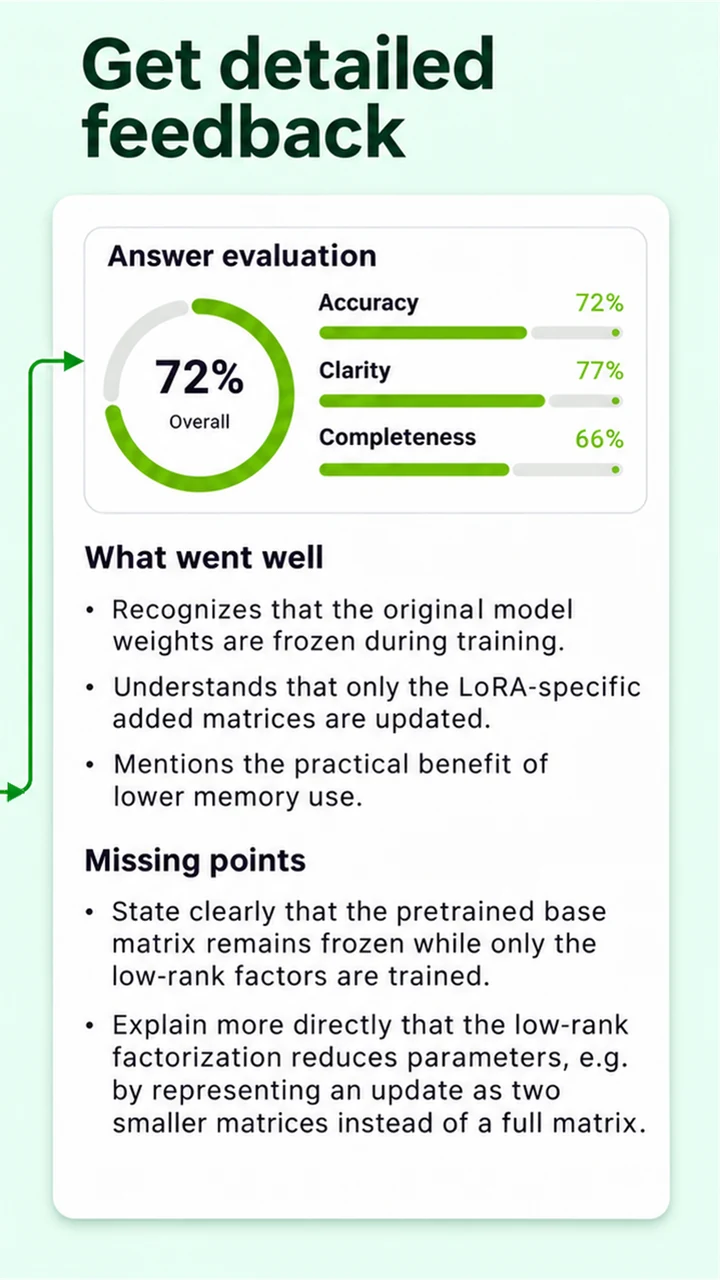
Interview feedback
- What went well
- make gives you a writable map. A single lookup also returns a well-defined integer for a missing key.
- What was missing
- Show both results of a lookup, and explain what happens when a map has only been declared with var.
- What to correct
- Zero can be a stored count. If m["paid"] = 0, checking the number alone would report a missing key.
- What to mention
- Use a stored zero and an absent key as separate test cases.
Improved candidate answer
I’d initialize with make(map[string]int) or a map literal. With v, ok := m[key], v can be zero in both cases and ok tells me whether the entry exists. Reading a nil map also works and returns the zero value with ok false. I must initialize it before an insertion or the write will panic.
Practice 24/7 on the web or in the mobile apps
Why it is useful to prepare for a Go interview with AI
In a Go interview, it is important to explain how seemingly simple concurrent code behaves under load and during failures. Practicing with AI (Artificial Intelligence) helps you justify service architecture, goroutine management, and interactions with dependencies.
Master topics in learning mode
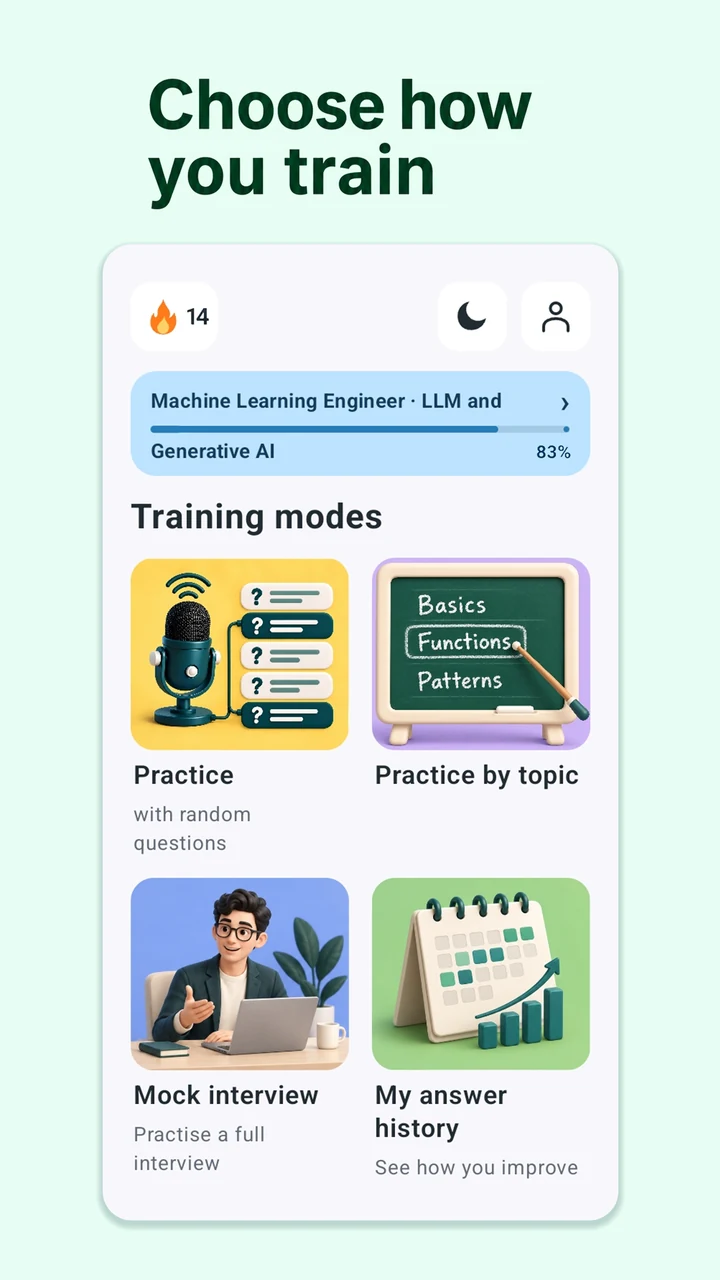
Analyze goroutines, channels, synchronization primitives, interfaces, and error handling. Learn to choose the right way to coordinate tasks, propagate cancellation using context, and limit concurrency. Practice explaining the causes of data races, goroutine leaks, and increased memory consumption.
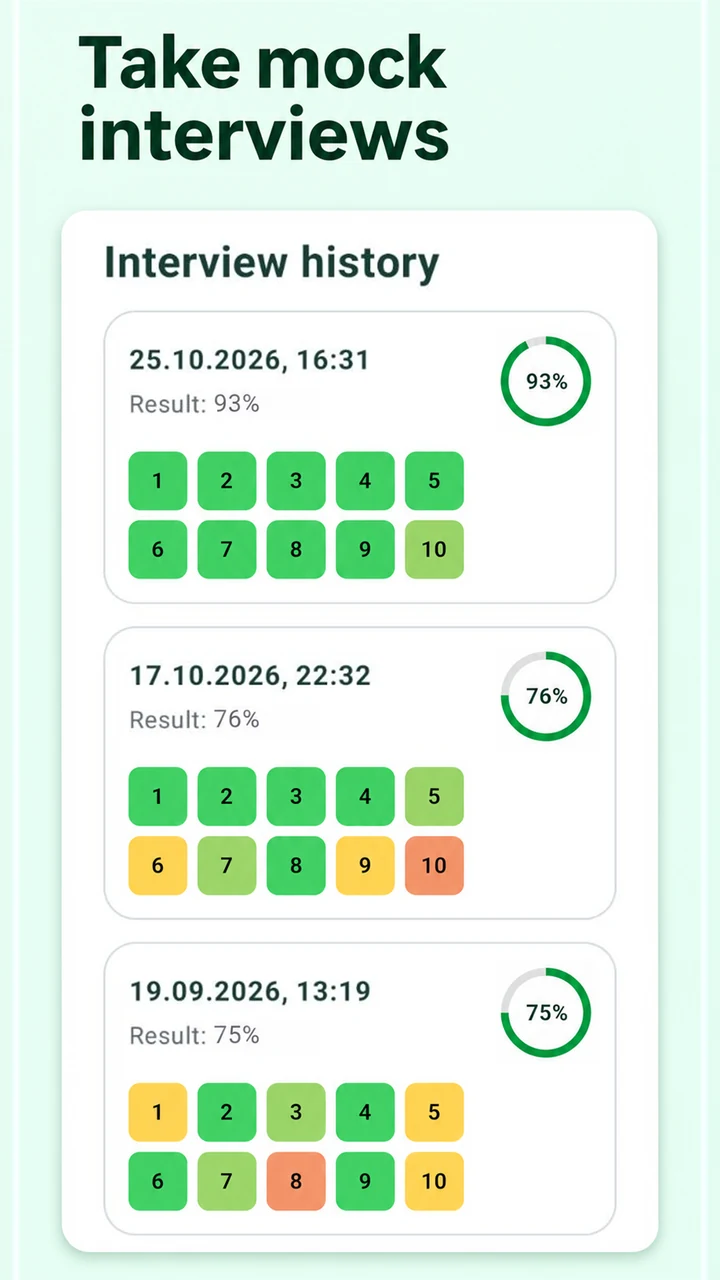
Test yourself in a mock interview
Design a Go service that queries multiple data sources concurrently. Justify your timeouts, load limits, and the system's behavior during partial failures. Explain graceful service shutdown and ways to test concurrent code.
- Practice speaking, not only reading answers
- Get technical feedback after each answer
- Practice clear reasoning under follow-up pressure
Spend your interview prep time practicing, not setting up AI
ChatGPT and Claude can ask technical questions. EngineerSpeak gives you a ready-made preparation system created by people who have been through technical interviews themselves, many times.
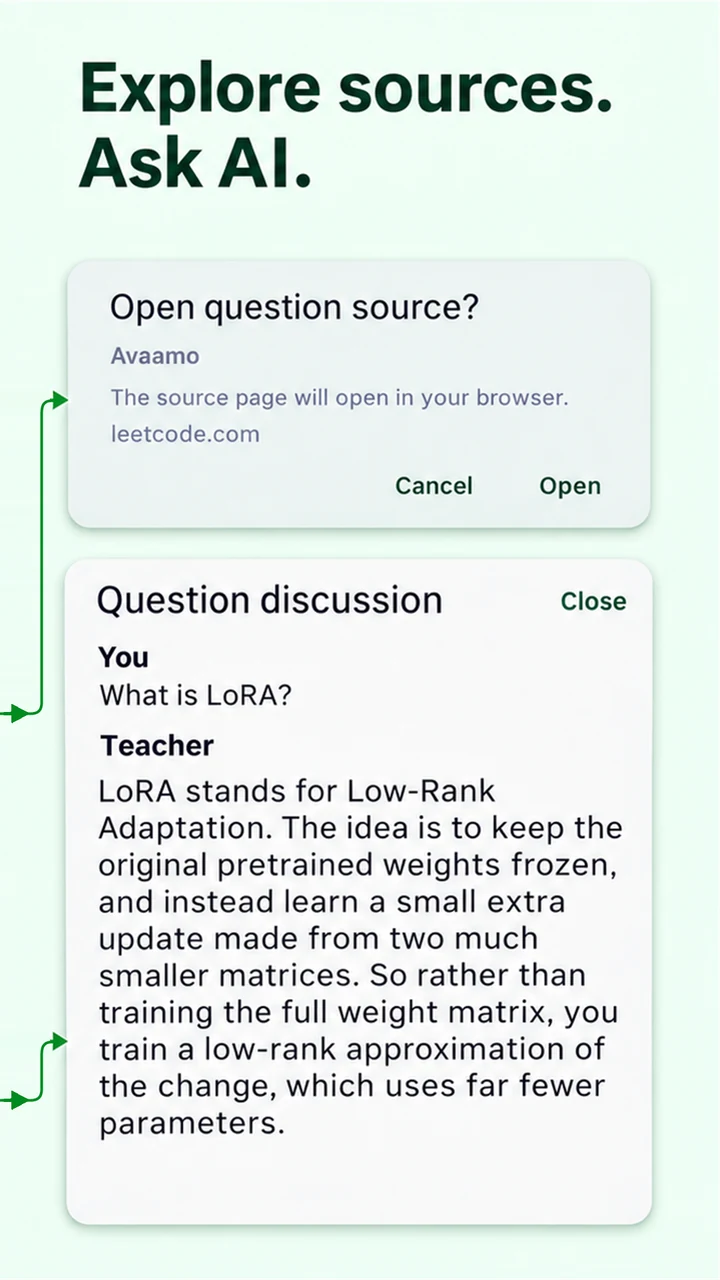
Choose your specialization and level—the training structure is already in place. Explore individual topics with an AI tutor, test yourself in a mock interview, and get feedback on your answers. The next questions are selected individually for you, taking your previous practice into account.
Less time organizing your preparation. More time building the knowledge and answers you’ll need in an interview.
Practice area
What this track covers
Go backend interviews test framework fluency, language fundamentals and production service judgment.
- Core language and runtime behavior
- Web framework, SQL and testing
- Performance, reliability and production debugging
Practice area
How to structure spoken answers
Practice turning what you know into a clear interview answer: define the concept, explain the runtime behavior and connect it to trade-offs.
- Go fundamentals, goroutines, channels, interfaces, HTTP services, testing, profiling and production reliability
- Technical clarity and examples
- Trade-offs and production signals
Interview questions
Example questions:
These examples are selected for English content and rotate by page language, so every localized setup page has distinct interview questions.
- How would you explain goroutines and channels in a backend service?
- What would you check first if a Go API becomes slow or starts leaking goroutines?
Frequently Asked Questions
Everything you need to know about practicing technical interviews with EngineerSpeak.
What is EngineerSpeak and how does it work?
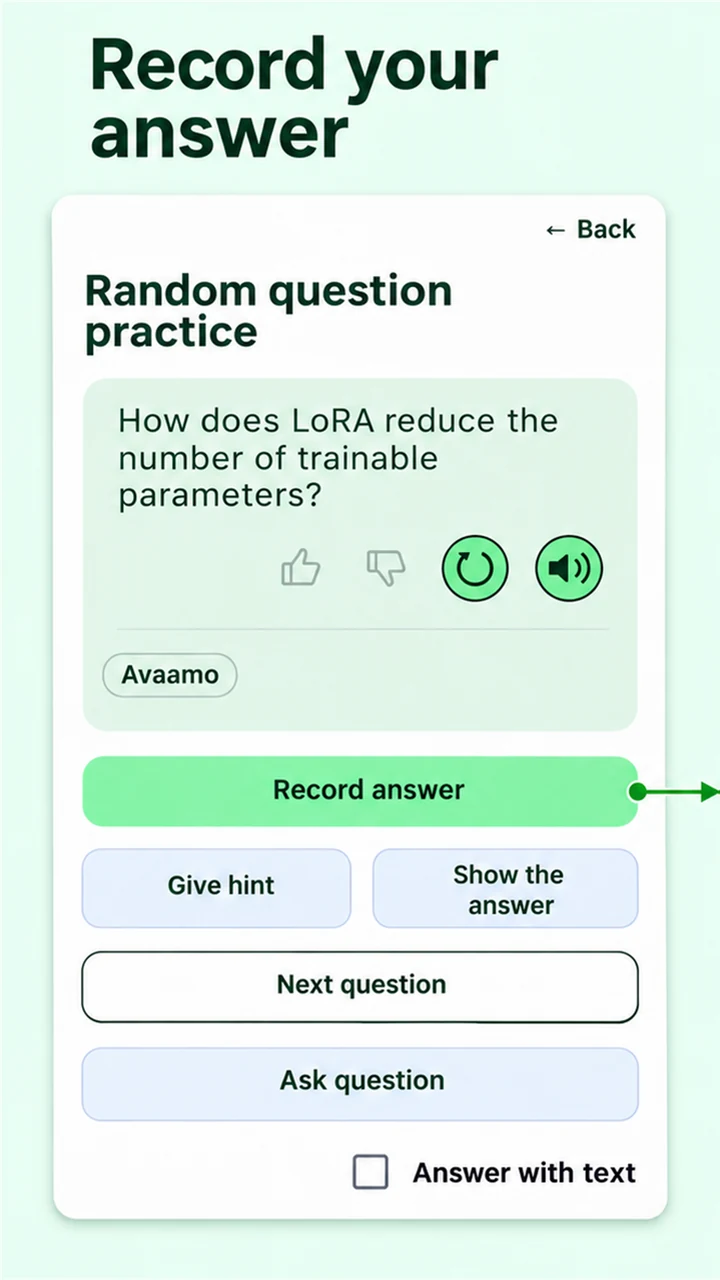
EngineerSpeak is an AI-powered technical interview practice platform. Choose your role and seniority, answer technical questions by voice, and receive structured feedback on your responses.
Can EngineerSpeak help me practice technical interviews?
Yes. EngineerSpeak simulates realistic technical interview scenarios and asks contextual follow-up questions based on your answers. It helps you practice explaining technical decisions, assumptions, implementation details, and trade-offs.
Does EngineerSpeak provide feedback on my answers?
Yes. After the interview, EngineerSpeak provides structured feedback to help you identify strong answers, missing details, and areas that need more practice.
Can I choose my experience level?
Yes. You can select Junior, Middle, or Senior level so the questions and expected depth match the position you are preparing for.
Does the AI ask follow-up questions?
Yes. EngineerSpeak asks follow-up questions about constraints, implementation details, architecture, production concerns, and technical trade-offs.
Is EngineerSpeak suitable for beginners?
Yes. EngineerSpeak can help candidates prepare for their first technical interview by providing structured practice, realistic questions, and feedback on their answers.
Is EngineerSpeak suitable for experienced professionals?
Yes. Experienced professionals can use EngineerSpeak to prepare for senior technical interviews and practice explaining architecture, production decisions, constraints, and trade-offs.
Do I need to install anything?
No. EngineerSpeak works in your browser, so you can start practicing without installing additional software.
What happens to my audio recordings?
Your audio recordings are deleted after transcription and are not retained. If you’re signed in, your interview transcripts and feedback are saved so you can review them from your dashboard.
Practice technical interviews anywhere, anytime
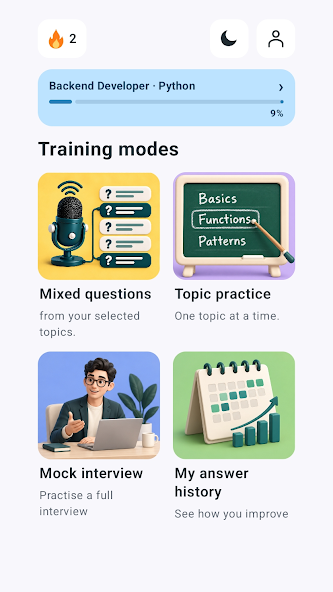
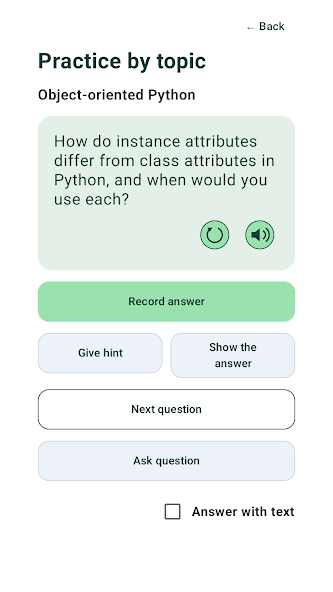
EngineerSpeak brings technical interview practice to your phone. Answer questions out loud, explore topics with an AI tutor, and get feedback wherever you are.