Computer Vision Interview Practice
Prepare for questions about images as data, visual representations and the cost of serving a vision model.
Selected track
- Explain your reasoning aloud
- Identify gaps in your technical answers
- Practice responding to follow-up questions
Our question bank includes questions candidates reported in interviews at these companies
- Meta
- Booking.com
- Bloomberg
- Microsoft
- Stripe
- Apple
- EPAM Systems
- OpenAI
- Netflix
- Spotify
- GitHub
- HackerRank
- Rakuten
- Shopify
- Thoughtworks
- Amazon
- Uber
- Airbnb
- Walmart
- Anthropic
- DoorDash
- NVIDIA
- JPMorgan Chase
- PayPal
- Cloudera
- Google Cloud
- HDFC
- Scale AI
- TCS
Practice 24/7 on the web or in the mobile apps
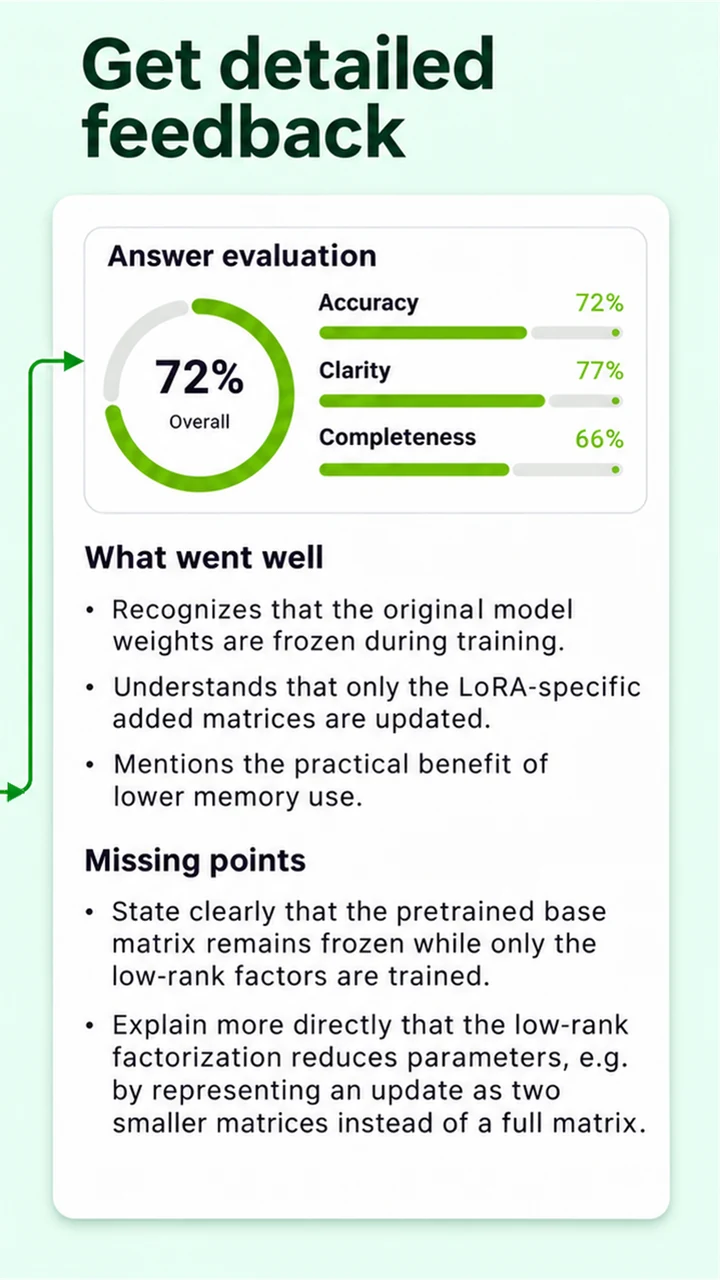
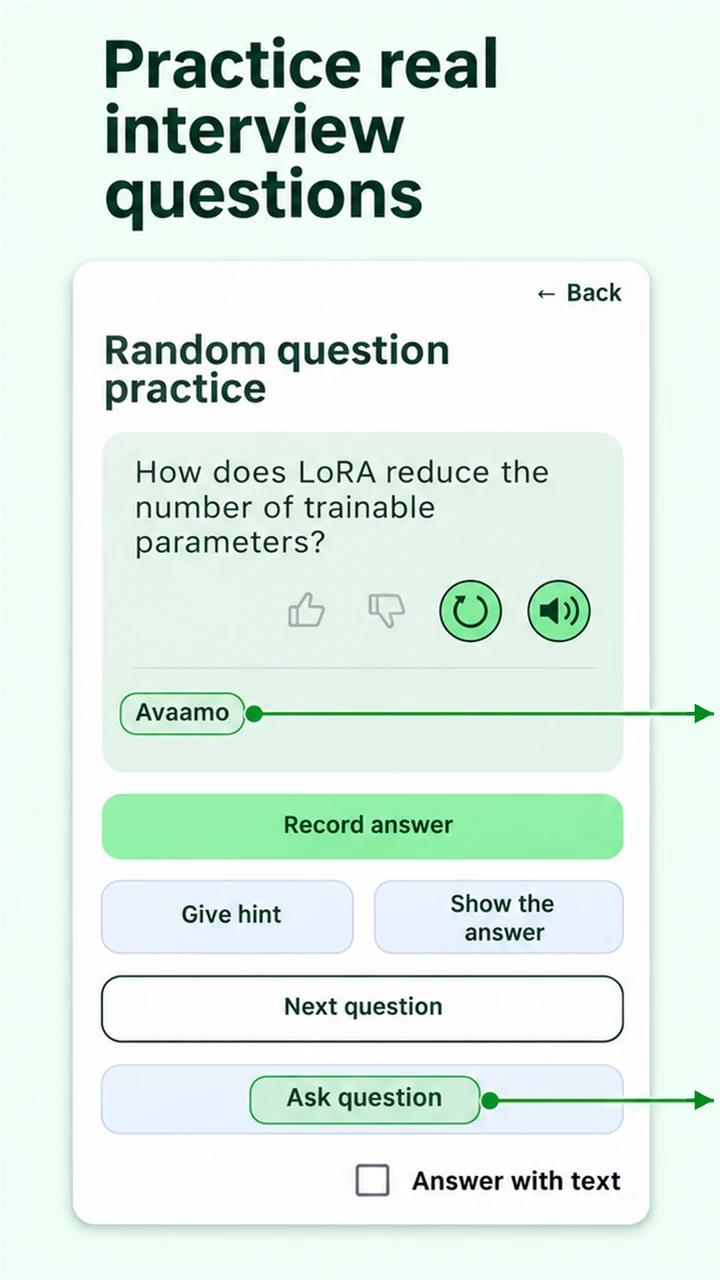
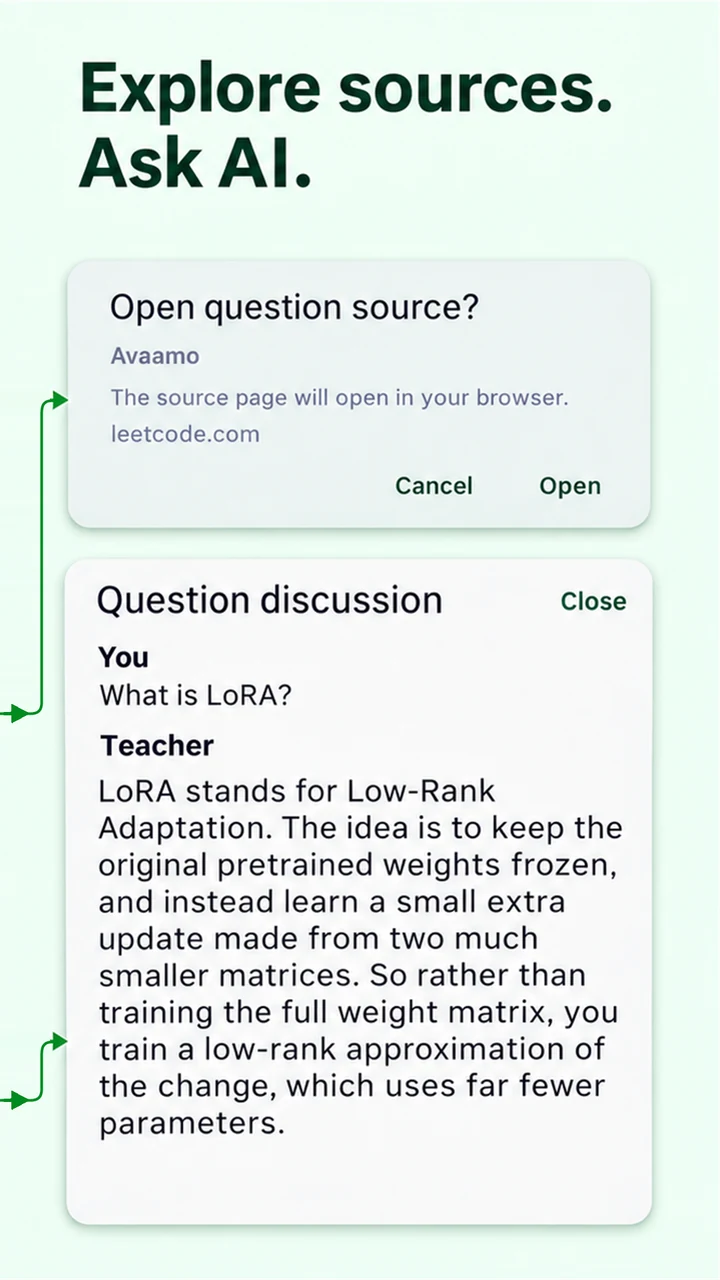
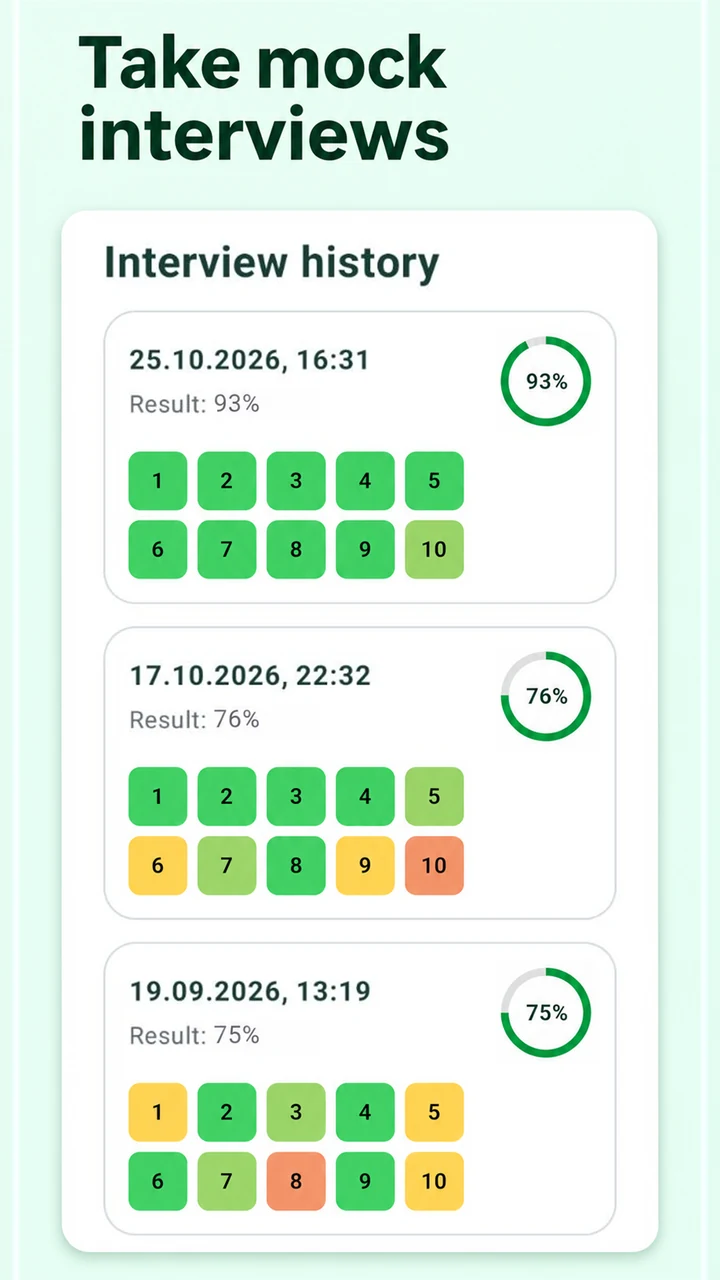
Sample candidate evaluation
Given image embedding vectors and a query vector, how would you return the k nearest results and scale retrieval as the collection grows?
Sample candidate answer
I’d compute a dot product with every image and keep the best k. Once the catalog grows, I’d switch to an approximate index. The dot product gives cosine similarity for any embeddings.
Interview feedback
- What went well
- An exact scan gives you a reproducible top-k baseline before you introduce approximation.
- What was missing
- Explain how you will measure what the approximate index loses and what happens when an embedding has zero norm.
- What to correct
- A raw dot product depends on vector magnitude. For cosine search, normalize the query and each nonzero catalog vector to unit length.
- What to mention
- Track recall@k against exact results, tail latency and memory on representative queries.
Improved candidate answer
For cosine similarity I’d normalize nonzero embeddings and explicitly exclude or handle zero vectors. I’d scan with dot products and keep the k highest scores. For a larger catalog I’d benchmark an approximate index against that exact baseline, tune its search budget and compare recall@k, p95 latency and memory before deployment.
Trace a visual search result
Master topics in learning mode
Start with exact nearest-neighbor search. Compare two candidate embeddings on a labeled image set and inspect their retrieval errors.
Test yourself in a mock interview
Your photo catalog grows tenfold. Choose an index and show how you would quantify the recall lost to meet the latency budget.
- Explain your reasoning aloud
- Identify gaps in your technical answers
- Practice responding to follow-up questions
Spend your interview prep time practicing, not setting up AI
ChatGPT and Claude can ask technical questions. EngineerSpeak gives you a ready-made preparation system created by people who have been through technical interviews themselves, many times.
Choose your specialization and level—the training structure is already in place. Explore individual topics with an AI tutor, test yourself in a mock interview, and get feedback on your answers. The next questions are selected individually for you, taking your previous practice into account.
Less time organizing your preparation. More time building the knowledge and answers you’ll need in an interview.
Practice area
Topics you can practice
Image embeddings, geometric transforms, detection metrics and latency constraints in visual search.
Interview questions
Example questions:
An example of the reasoning you can practice in this field. Your interview questions depend on the specialization and level you select.
- How would you find similar images in a catalog of ten million photos?
- How would you tell whether a miss came from the embedding or the search index?
Frequently Asked Questions
Everything you need to know about practicing technical interviews with EngineerSpeak.
What is EngineerSpeak and how does it work?
EngineerSpeak is an AI-powered technical interview practice platform. Choose your role and seniority, answer technical questions by voice, and receive structured feedback on your responses.
Can EngineerSpeak help me practice technical interviews?
Yes. EngineerSpeak simulates realistic technical interview scenarios and asks contextual follow-up questions based on your answers. It helps you practice explaining technical decisions, assumptions, implementation details, and trade-offs.
Does EngineerSpeak provide feedback on my answers?
Yes. After the interview, EngineerSpeak provides structured feedback to help you identify strong answers, missing details, and areas that need more practice.
Can I choose my experience level?
Yes. You can select Junior, Middle, or Senior level so the questions and expected depth match the position you are preparing for.
Does the AI ask follow-up questions?
Yes. EngineerSpeak asks follow-up questions about constraints, implementation details, architecture, production concerns, and technical trade-offs.
Is EngineerSpeak suitable for beginners?
Yes. EngineerSpeak can help candidates prepare for their first technical interview by providing structured practice, realistic questions, and feedback on their answers.
Is EngineerSpeak suitable for experienced professionals?
Yes. Experienced professionals can use EngineerSpeak to prepare for senior technical interviews and practice explaining architecture, production decisions, constraints, and trade-offs.
Do I need to install anything?
No. EngineerSpeak works in your browser, so you can start practicing without installing additional software.
What happens to my audio recordings?
Your audio recordings are deleted after transcription and are not retained. If you’re signed in, your interview transcripts and feedback are saved so you can review them from your dashboard.
Practice technical interviews anywhere, anytime
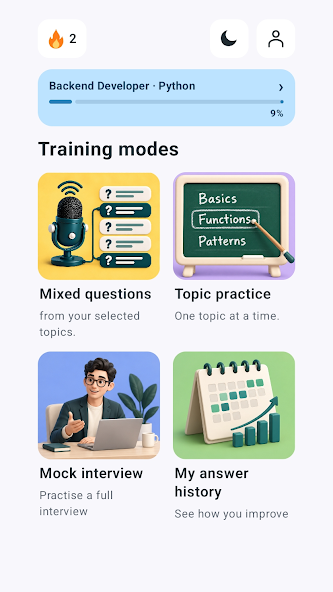
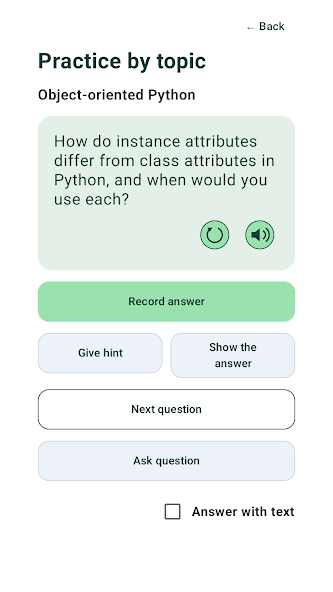
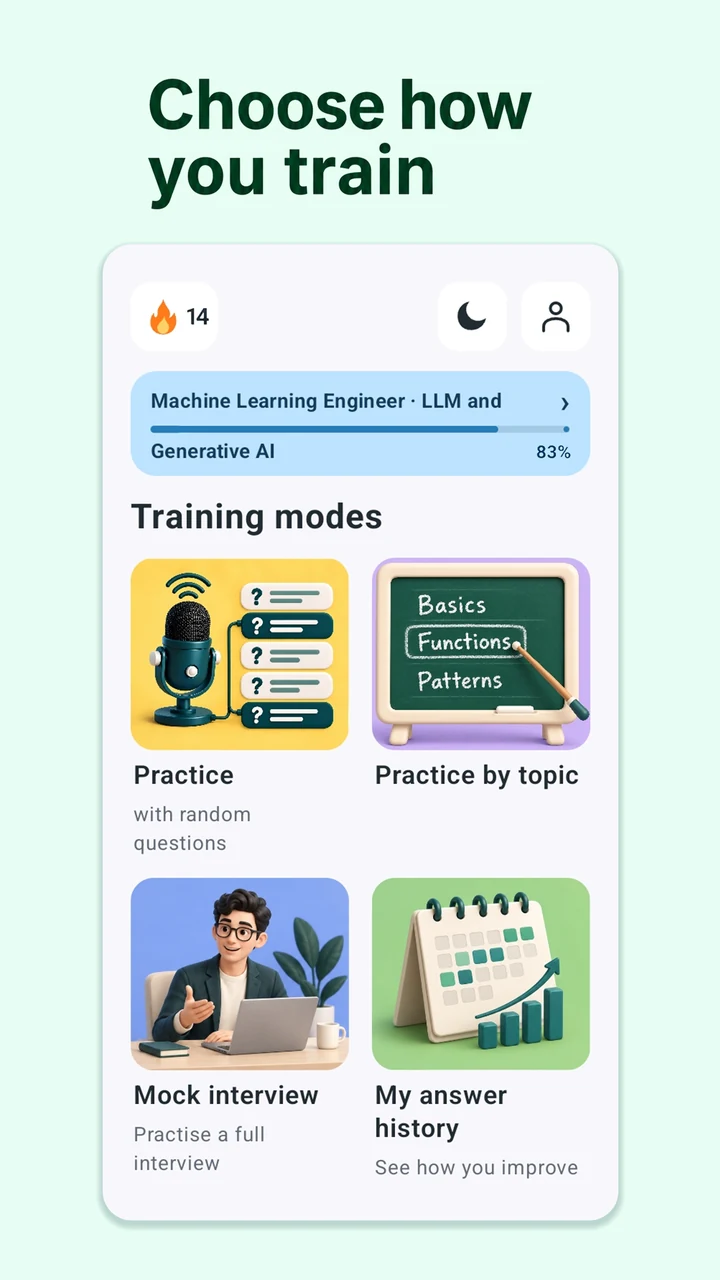
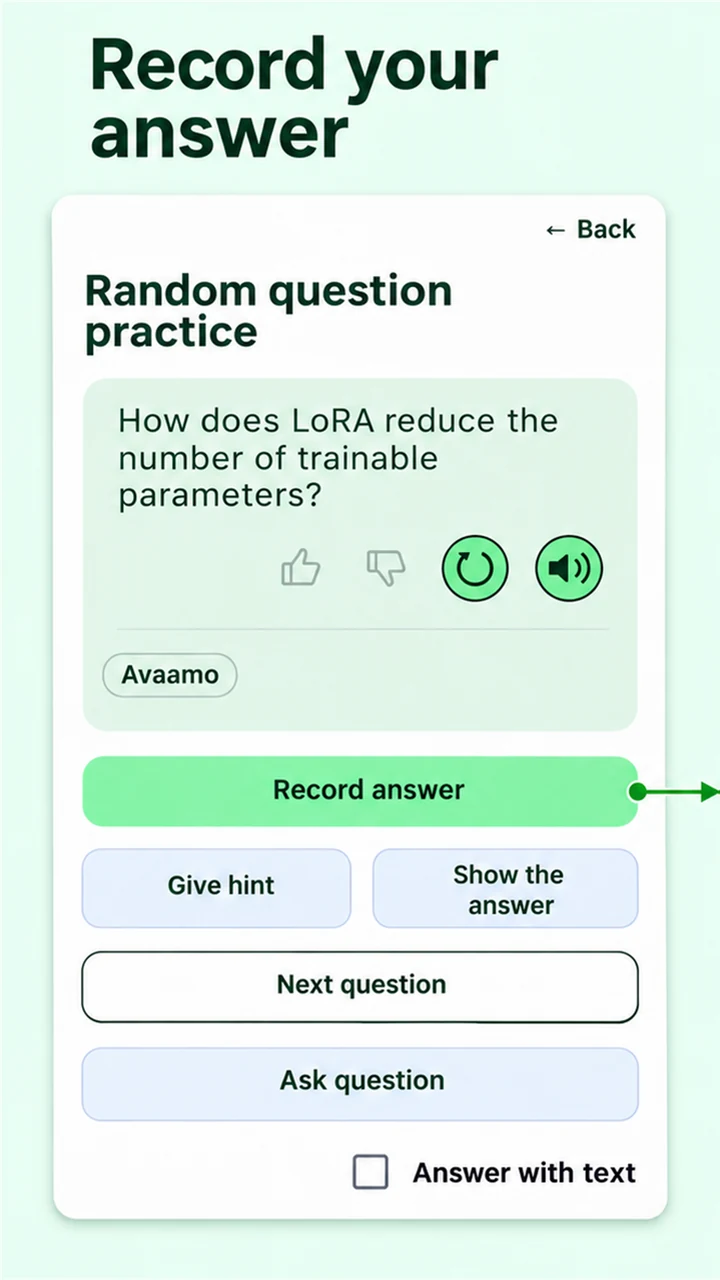
EngineerSpeak brings technical interview practice to your phone. Answer questions out loud, explore topics with an AI tutor, and get feedback wherever you are.