Multimodal Machine Learning Interview Practice
Practice reasoning about what each input measures, how to align the inputs and what to do when one goes missing.
Selected track
- Explain your reasoning aloud
- Identify gaps in your technical answers
- Practice responding to follow-up questions
Our question bank includes questions candidates reported in interviews at these companies
- Meta
- Booking.com
- Bloomberg
- Microsoft
- Stripe
- Apple
- EPAM Systems
- OpenAI
- Netflix
- Spotify
- GitHub
- HackerRank
- Rakuten
- Shopify
- Thoughtworks
- Amazon
- Uber
- Airbnb
- Walmart
- Anthropic
- DoorDash
- NVIDIA
- JPMorgan Chase
- PayPal
- Cloudera
- Google Cloud
- HDFC
- Scale AI
- TCS
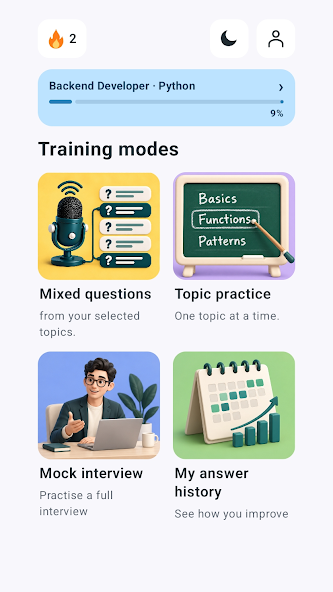
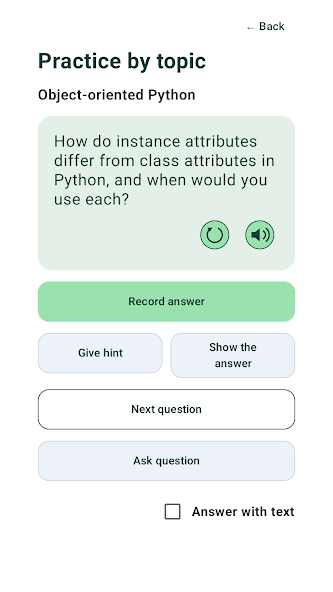
Practice 24/7 on the web or in the mobile apps
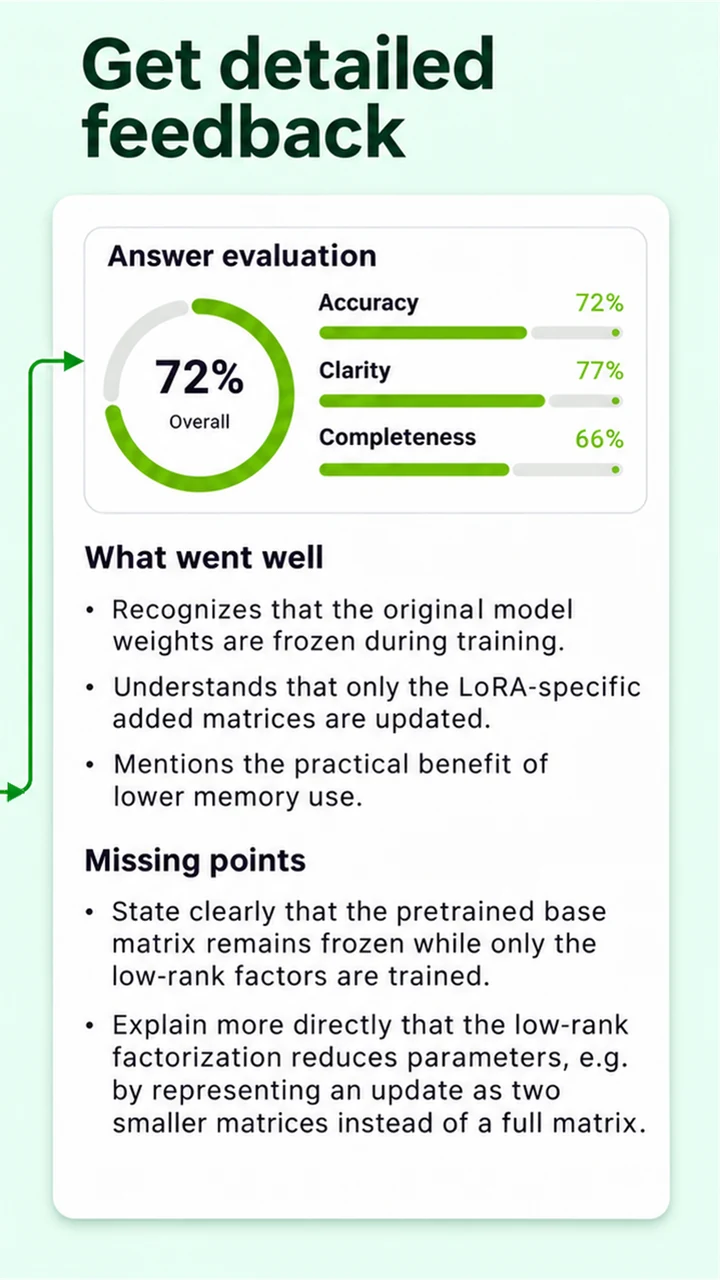
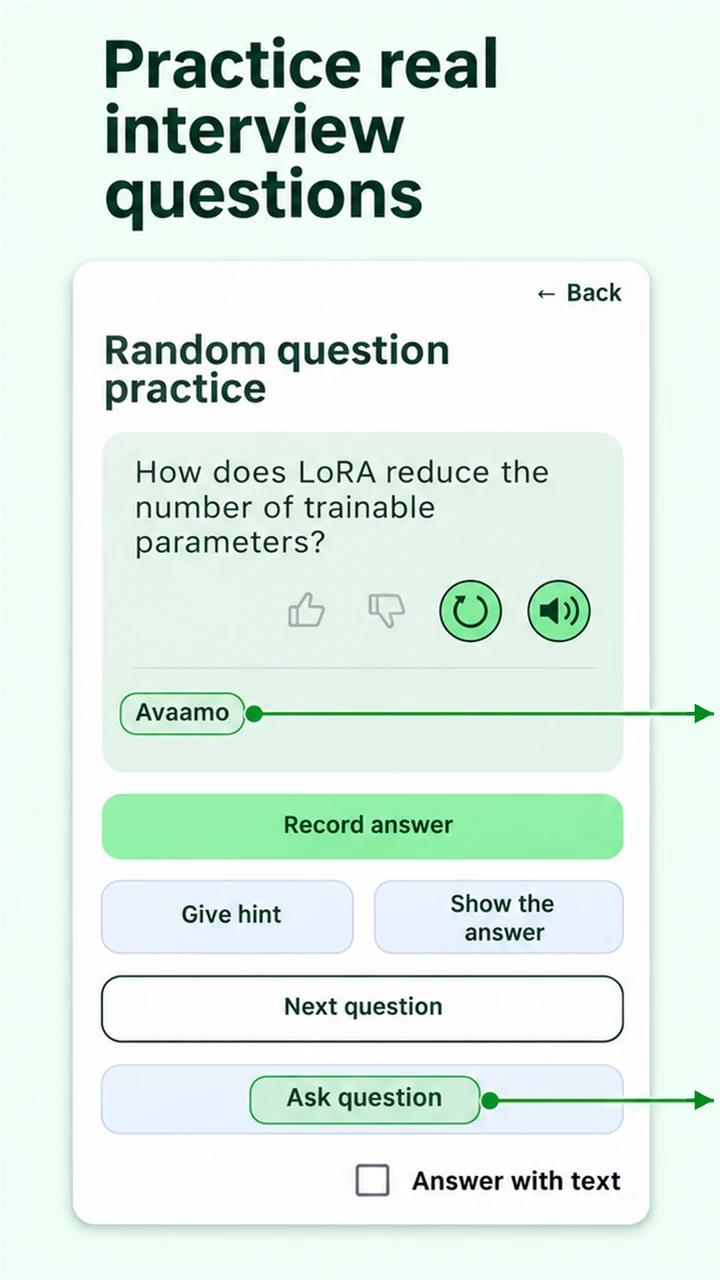
Sample candidate evaluation
What information can radar or lidar supply that is difficult to recover from a single camera image, and what integration costs come with it?
Sample candidate answer
I’d add lidar for distance and radar for speed. I’d project their detections onto the camera image using one calibration matrix. That should be enough even when the car is moving.
Interview feedback
- What went well
- You identified physical measurements that complement image appearance. Range helps resolve the scale ambiguity of a single frame.
- What was missing
- Mention radar’s radial velocity, differences in noise and angular resolution, and the operating cost of a second sensor.
- What to correct
- A spatial transform alone does not align measurements taken at different times. A moving object can project onto the wrong image region.
- What to mention
- Test the fused model against a camera-only baseline in poor visibility and simulate a sensor dropout.
Improved candidate answer
A camera captures appearance, lidar samples 3D surface geometry and radar can measure range and radial speed. I’d align coordinate systems and timestamps, compensate for motion and associate detections with uncertainty. Then I’d measure gains under difficult conditions against compute, power and maintenance costs, and verify degraded operation when a sensor drops out.
Explain how two measurements become one prediction
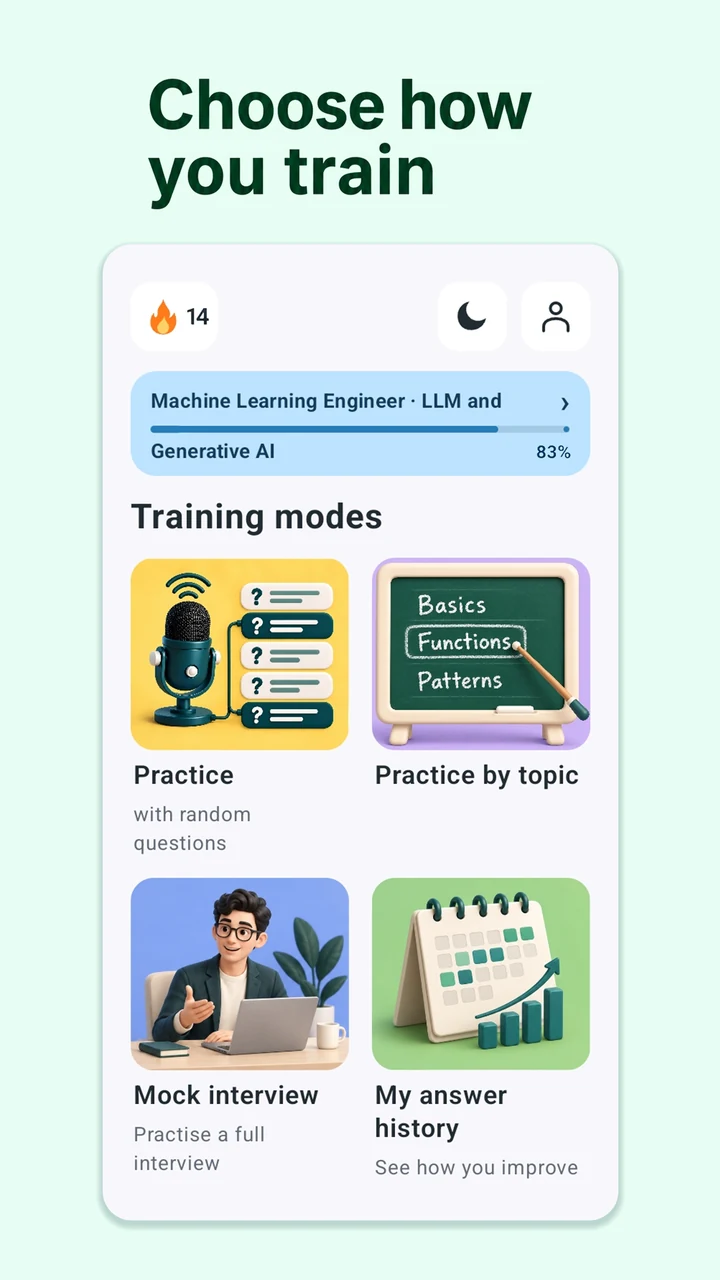
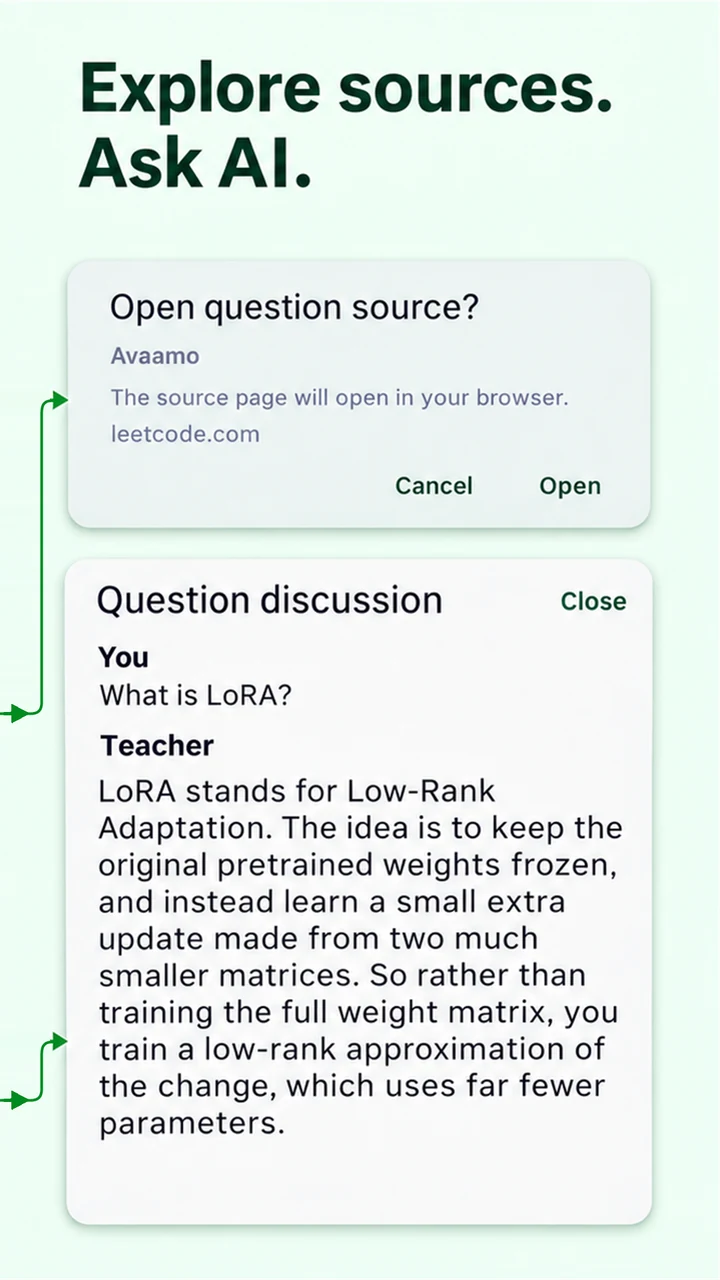
Master topics in learning mode
Follow a moving object from a radar return into an image. Predict where it will appear if the camera timestamp is late.
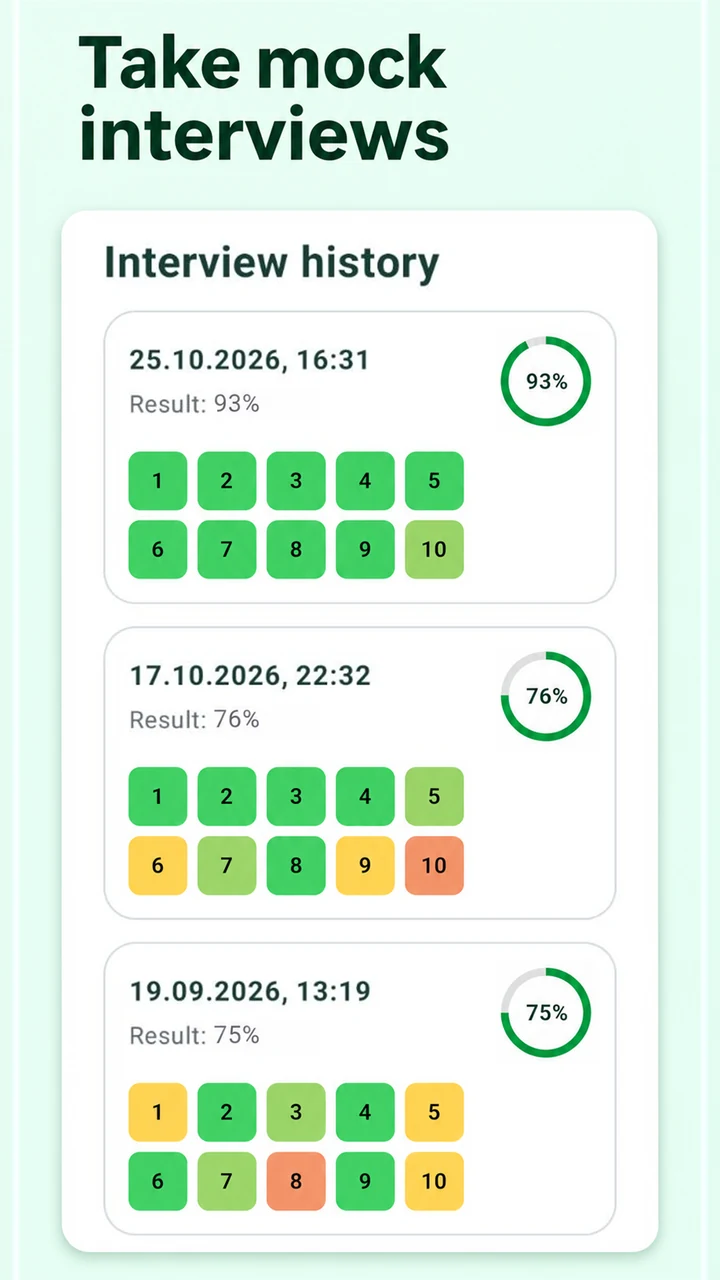
Test yourself in a mock interview
One sensor becomes unreliable at night. Design a baseline, a degraded operating mode and a test of the value of the remaining inputs.
- Explain your reasoning aloud
- Identify gaps in your technical answers
- Practice responding to follow-up questions
Spend your interview prep time practicing, not setting up AI
ChatGPT and Claude can ask technical questions. EngineerSpeak gives you a ready-made preparation system created by people who have been through technical interviews themselves, many times.
Choose your specialization and level—the training structure is already in place. Explore individual topics with an AI tutor, test yourself in a mock interview, and get feedback on your answers. The next questions are selected individually for you, taking your previous practice into account.
Less time organizing your preparation. More time building the knowledge and answers you’ll need in an interview.
Practice area
Topics you can practice
Sensor fusion, coordinate frames, synchronization, uncertainty and evaluation with missing modalities.
Interview questions
Example questions:
An example of the reasoning you can practice in this field. Your interview questions depend on the specialization and level you select.
- What can a radar tell you about a moving object that a single camera frame cannot?
- How would you tell a timing offset from a calibration error in a fused prediction?
Frequently Asked Questions
Everything you need to know about practicing technical interviews with EngineerSpeak.
What is EngineerSpeak and how does it work?
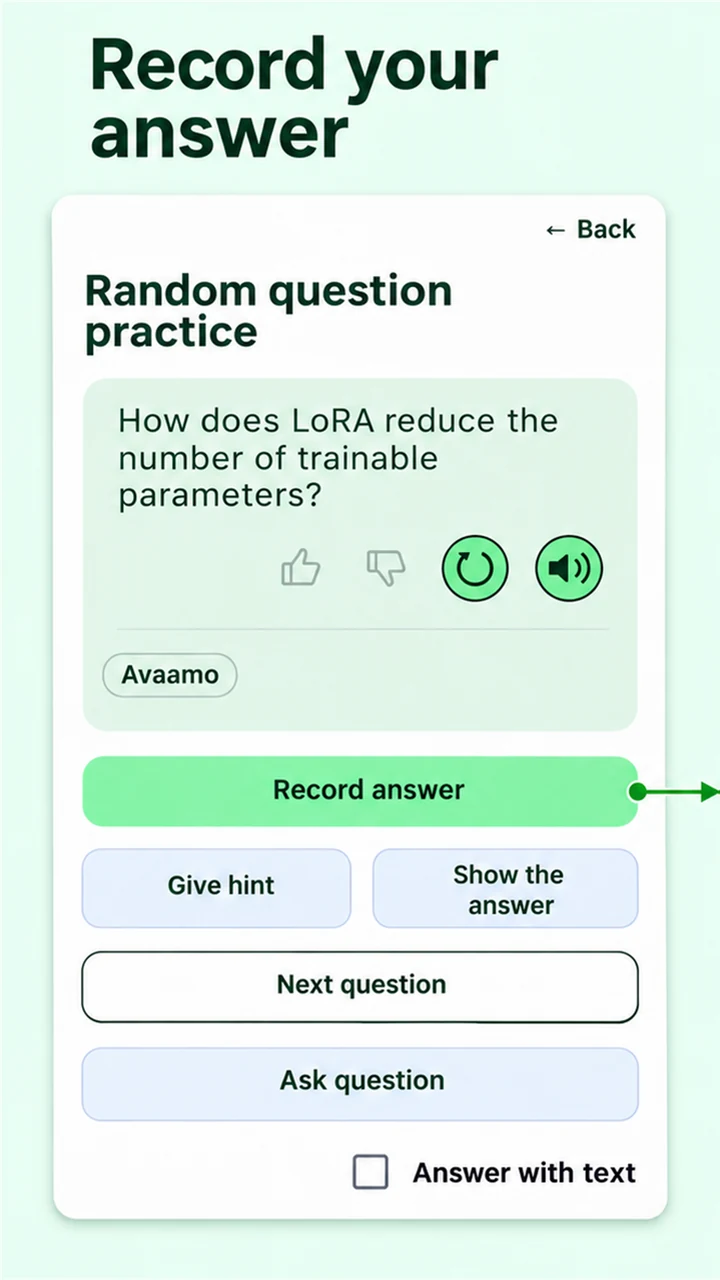
EngineerSpeak is an AI-powered technical interview practice platform. Choose your role and seniority, answer technical questions by voice, and receive structured feedback on your responses.
Can EngineerSpeak help me practice technical interviews?
Yes. EngineerSpeak simulates realistic technical interview scenarios and asks contextual follow-up questions based on your answers. It helps you practice explaining technical decisions, assumptions, implementation details, and trade-offs.
Does EngineerSpeak provide feedback on my answers?
Yes. After the interview, EngineerSpeak provides structured feedback to help you identify strong answers, missing details, and areas that need more practice.
Can I choose my experience level?
Yes. You can select Junior, Middle, or Senior level so the questions and expected depth match the position you are preparing for.
Does the AI ask follow-up questions?
Yes. EngineerSpeak asks follow-up questions about constraints, implementation details, architecture, production concerns, and technical trade-offs.
Is EngineerSpeak suitable for beginners?
Yes. EngineerSpeak can help candidates prepare for their first technical interview by providing structured practice, realistic questions, and feedback on their answers.
Is EngineerSpeak suitable for experienced professionals?
Yes. Experienced professionals can use EngineerSpeak to prepare for senior technical interviews and practice explaining architecture, production decisions, constraints, and trade-offs.
Do I need to install anything?
No. EngineerSpeak works in your browser, so you can start practicing without installing additional software.
What happens to my audio recordings?
Your audio recordings are deleted after transcription and are not retained. If you’re signed in, your interview transcripts and feedback are saved so you can review them from your dashboard.
Practice technical interviews anywhere, anytime
EngineerSpeak brings technical interview practice to your phone. Answer questions out loud, explore topics with an AI tutor, and get feedback wherever you are.